
 Post Your Requirement
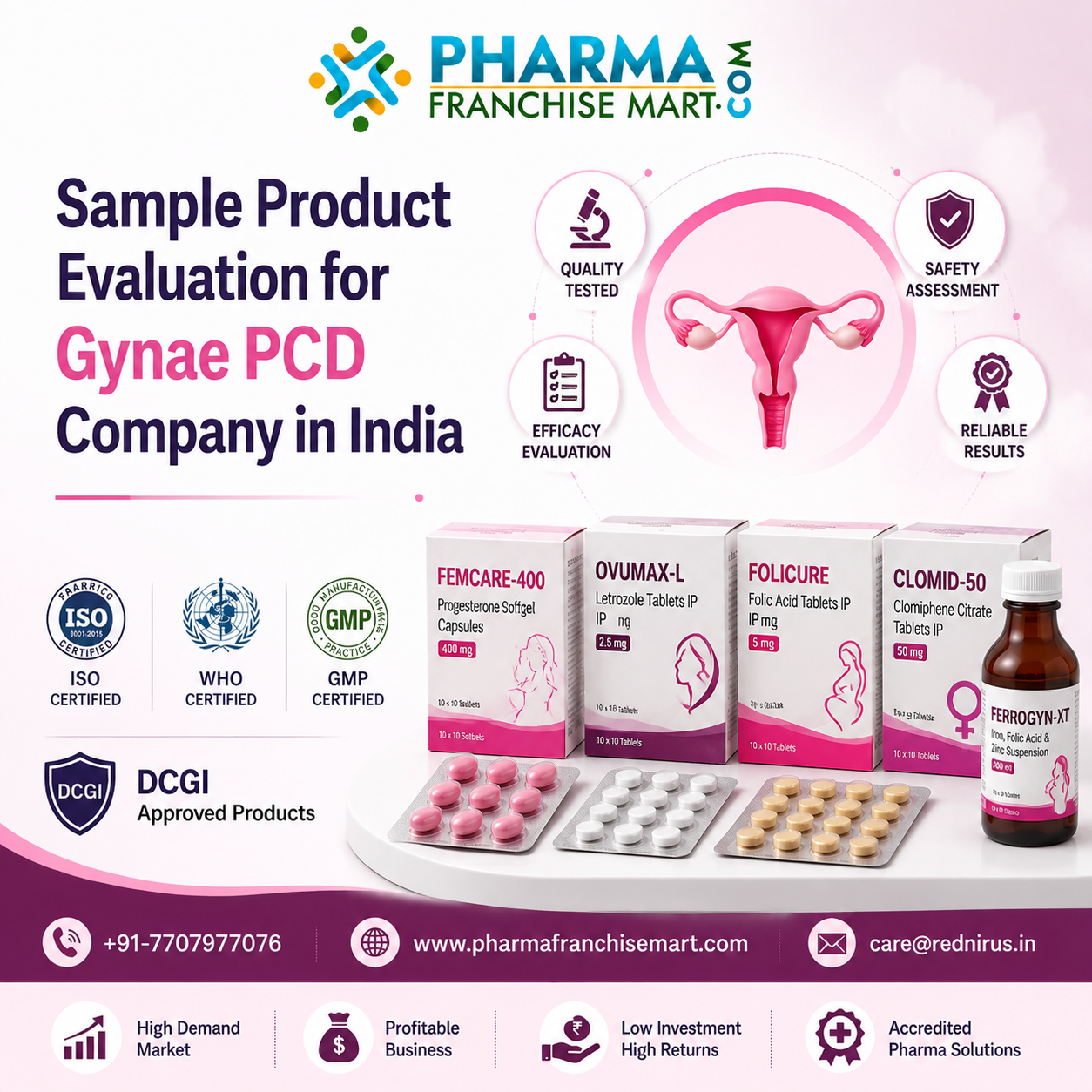
Most gynae PCD company in India evaluations focus on manufacturer presentations, pricing discussions, and territory negotiations. Sample product evaluation—actually assessing physical products before committing—gets treated as afterthought.
Big mistake.
Every gynae PCD company in India produces impressive brochures. Every manufacturer shows professional product photographs. Every sales pitch includes quality certification badges and manufacturing facility photos.
None of this tells you what products actually look and feel like in hand. Whether tablets are consistent. Whether packaging meets professional standards. Whether documentation accompanying products reflects genuine quality systems or checkbox compliance.
Gynae medicine product evaluation through physical samples reveals operational reality that no presentation, certificate, or facility tour can substitute. Prescribers evaluate products physically when you provide samples. Pharmacists assess packaging when stocking shelves. Patients notice product appearance when opening medicine strips.
Every gynae PCD company in India worth partnering with provides samples for honest evaluation. Those refusing sample provision or providing only selected showcase products before partnership commitment are hiding something worth discovering before you sign.
We’re walking through systematic sample evaluation approach covering every quality dimension serious gynae PCD pharma franchise operators should assess.
Requesting the Right Sample Mix
Strategic Sample Selection
Don’t let gynae PCD company in India manufacturers choose which samples to provide. They’ll select their best-performing, highest-quality products for evaluation while hiding weaker categories.
Request samples strategically across therapeutic categories you plan distributing:
Hormonal products—oral contraceptives, progesterone formulations, HRT options. Prenatal nutrition range—iron formulations, calcium combinations, prenatal multivitamins. Vaginal health products—antifungal preparations, probiotic formulations. PCOS management products—metformin combinations, inositol formulations. Supportive nutritional supplements—folic acid, vitamin D combinations.
Horizontal sampling across categories reveals whether quality is consistent everywhere or concentrated in showcase products while routine items receive less attention.
Requesting Multiple Batches
Request samples from at least 2-3 different production batches of key products. Single batch samples could represent exceptional production specifically selected for evaluation purposes.
Multiple batch samples from different production periods reveal whether quality consistency exists across manufacturing cycles or whether evaluated samples are exceptional rather than representative.
Any gynae PCD company resistant to providing multi-batch samples citing logistics or availability concerns raises immediate questions about consistency they may not want you assessing across batches.
Physical Product Evaluation
Tablet and Capsule Assessment
Solid oral dosage forms—tablets and capsules—reveal manufacturing quality through careful physical examination.
Appearance consistency: All tablets within same strip should look identical. Examine color uniformity across every tablet. Slight color variation between tablets suggests inconsistent coating or manufacturing process control problems affecting more than appearance.
Surface quality: Tablet surfaces should be smooth, free from chips, cracks, or surface defects. Rough or irregular tablet surfaces indicate manufacturing or coating process problems. Chipped tablets suggest inappropriate hardness or handling damage during packaging.
Size and shape uniformity: Every tablet should be identical in size and shape. Variation across tablets within same batch suggests compression problems affecting both appearance and potentially active ingredient content uniformity.
Coating integrity: Film-coated tablets should have complete, uniform coating without cracks, peeling, or bare patches. Coating protects active ingredients from degradation and affects dissolution profile. Coating defects compromise both stability and clinical performance.
Imprint clarity: Branded tablets often carry imprint identifying product. Imprints should be clear, consistent depth, correctly positioned. Inconsistent imprinting suggests manufacturing process issues.
Capsule-Specific Evaluation
Hard gelatin and HPMC capsules require additional assessment points.
Shell integrity: Capsule shells should be intact without cracks, deformation, or visible damage. Damaged shells compromise product protection and patient confidence.
Fill consistency: Holding capsule up to light source reveals whether fill material appears consistent. Obvious variation in fill density across capsules suggests manufacturing inconsistency.
Locking mechanism: Hard gelatin capsules should close firmly with audible click confirming proper sealing. Loose capsules suggest shell size mismatch or quality control gaps.
Liquid and Semi-Solid Evaluation
Syrups, suspensions, vaginal creams, and gels require different assessment approaches.
Clarity and appearance: Clear liquids should be free from particulate matter, cloudiness, or discoloration. Suspensions should redisperse uniformly with gentle shaking without leaving stubborn sediment.
Consistency: Creams and gels should have smooth, uniform consistency without lumps, separation, or grainy texture. Non-uniform semi-solids suggest manufacturing or stability problems.
Color consistency: Compare color across multiple units of same product. Significant color variation between units suggests manufacturing process inconsistency or stability issues.
Odor assessment: Unusual or off odors beyond expected fragrance suggest degradation, contamination, or raw material quality problems.
Packaging Quality Assessment
Primary Packaging Evaluation
Primary packaging—blister strips, bottles, tubes directly contacting products—reveals quality investment and patient-facing professionalism.
Blister strip quality: Aluminum foil quality should feel substantial. Thin, flimsy foil tears during patient use creating medication access problems and suggesting cost-cutting on critical packaging materials.
Seal integrity: Press individual blisters firmly. Well-sealed blisters resist pressure without releasing product. Poor seals allow product to shift or release with minimal pressure—serious quality concern for moisture-sensitive hormonal gynae medicine products.
Strip cutting quality: Edges should be clean and straight without ragged cuts or sharp metal edges that could injure patients during handling. Manufacturing finishing quality reflects overall quality culture.
Bottle and container quality: Plastic bottles should have consistent wall thickness without weak spots. Cap threading should engage smoothly without cross-threading risk. Child-resistant closures should actually resist child opening while remaining accessible to adults.
Secondary Packaging Assessment
Carton and outer packaging quality reflects brand positioning and shipping protection quality.
Printing quality: Text should be sharp, correctly aligned, free from smudging or blurring. Poor printing quality creates negative first impression with prescribers receiving samples and pharmacists stocking products.
Carton construction: Folding and gluing quality affects structural integrity during shipping and storage. Poorly constructed cartons fail during handling, creating product damage and professional impression problems.
Color consistency: Compare multiple cartons of same product. Color variation across cartons suggests printing quality control issues.
Labeling and Documentation Review
Label Compliance Assessment
Gynae PCD product labels must contain legally required information presented correctly.
Mandatory information: Schedule H drug designation where applicable, generic name, brand name, manufacturer details, batch number, manufacturing date, expiry date, MRP, net contents, storage conditions, and prescribing information.
Missing mandatory information creates regulatory exposure. Incorrect information—wrong strength, missing warnings, incorrect storage guidance—creates patient safety concerns.
Information accuracy: Verify stated strength matches product description. Storage condition instructions should reflect actual product requirements. Expiry dates should represent stability-backed claims not arbitrary assertions.
Language compliance: Labels must include required information in languages meeting regulatory requirements. English plus regional language requirements vary by state.
Batch Documentation
Request batch-specific quality documentation accompanying samples. Certificates of analysis, batch release certificates, and testing reports reveal quality system depth.
Certificate of analysis content: Should include batch number, manufacturing date, test parameters, specification limits, actual test results, and authorized release signature. Generic certificates listing parameters without actual test results are meaningless documents created for appearance rather than quality assurance.
Assay results: Hormonal gynae medicine products—most critical gynae PCD company in India quality concern—should show active ingredient content within specification on certificate. Results showing 98-102% label claim indicate tight manufacturing control. Results at specification edges (90% or 110% of label claim, for example) indicate marginal manufacturing with clinical consistency concerns.
Testing parameter completeness: Complete quality testing covers assay, dissolution, content uniformity, microbial limits, physical characteristics, and stability-indicating parameters. Certificates covering only basic appearance and assay suggest incomplete testing programs.
Stability and Storage Assessment
Expiry Date Analysis
Evaluate remaining shelf life on sample products received. Products with short remaining shelf life—less than 60% of total shelf life remaining—suggest inventory management problems, poor stock rotation, or products approaching end of usable life being used as evaluation samples.
PCD pharma franchise India operators receiving samples with short shelf life should specifically request freshly manufactured batches for evaluation. Reasonable request that quality manufacturers fulfill without objection.
Storage Condition Suitability
Verify storage requirements on received samples match your infrastructure capabilities.
Some gynae products franchise products require refrigerated storage—certain hormonal preparations, biological fertility products. If you lack cold chain infrastructure, products requiring refrigeration create distribution problems regardless of quality.
Confirm storage requirements before selecting product ranges to distribute. Mismatched storage requirements and available infrastructure create quality compliance failures affecting both regulatory standing and prescriber confidence.
Comparative Evaluation Approach
Evaluating Multiple Manufacturers Simultaneously
When evaluating multiple gynae PCD company in India candidates, request identical product categories from each manufacturer simultaneously for direct comparison.
Side-by-side comparison reveals quality differences invisible when evaluating single manufacturer’s samples in isolation. Tablet consistency differences become obvious when strips from three manufacturers are examined simultaneously. Packaging quality variation stands out dramatically in direct comparison.
Comparative evaluation also reveals whether quality differences justify pricing differences between manufacturers. Sometimes higher-priced manufacturer offers genuinely superior quality worth the margin sacrifice. Other times similarly-priced manufacturers offer dramatically different quality levels.
Prescriber Sample Testing
Before committing to gynae PCD company in India partnership, provide samples to 2-3 trusted gynecologists in your target territory for clinical evaluation.
Ask specifically: “Could you try these samples with a few appropriate patients and share your clinical impression of product effectiveness and patient acceptability?”
Prescriber clinical feedback on sample products provides quality intelligence that no documentation review or physical examination can replicate. Experienced gynecologists who’ve prescribed multiple brands recognize consistency differences, patient tolerance variations, and formulation quality indicators through clinical experience.
Positive prescriber response to samples accelerates relationship development after partnership commitment. Negative prescriber experience reveals quality concerns before you’ve invested months building distribution around problematic products.
Documentation of Evaluation Findings
Systematic Evaluation Recording
Create structured evaluation records for each gynae PCD company in India candidate assessed. Document specific observations across every evaluation dimension rather than relying on overall impressions.
Systematic documentation enables objective comparison between manufacturers and prevents evaluation findings from blending into vague impressions over time. When making final partnership decisions weeks after sample evaluation, specific documented observations are far more valuable than remembered general impressions.
Record batch numbers of evaluated samples, manufacturing and expiry dates, specific physical observations, documentation quality assessment, and prescriber feedback where obtained.
Using Evaluation Findings in Negotiations
Documented sample evaluation findings provide specific evidence during partnership negotiations with preferred manufacturers.
Quality concerns identified during evaluation create legitimate basis for negotiation—requesting quality improvement commitments, negotiating enhanced warranty terms, or requiring specific quality documentation with every order.
Positive evaluation findings build confidence justifying partnership commitment. Strong physical quality combined with excellent documentation provides evidence supporting the decision to commit resources and territory development effort to specific gynae PCD pharma franchise partnerships.
Sample evaluation investment—typically 1-2 weeks of careful assessment—protects months of territory development effort and significant capital committed to building gynae PCD company in India distribution business.
Read more: Product Range Cardiac PCD Company in India Must Offer