
 Post Your Requirement
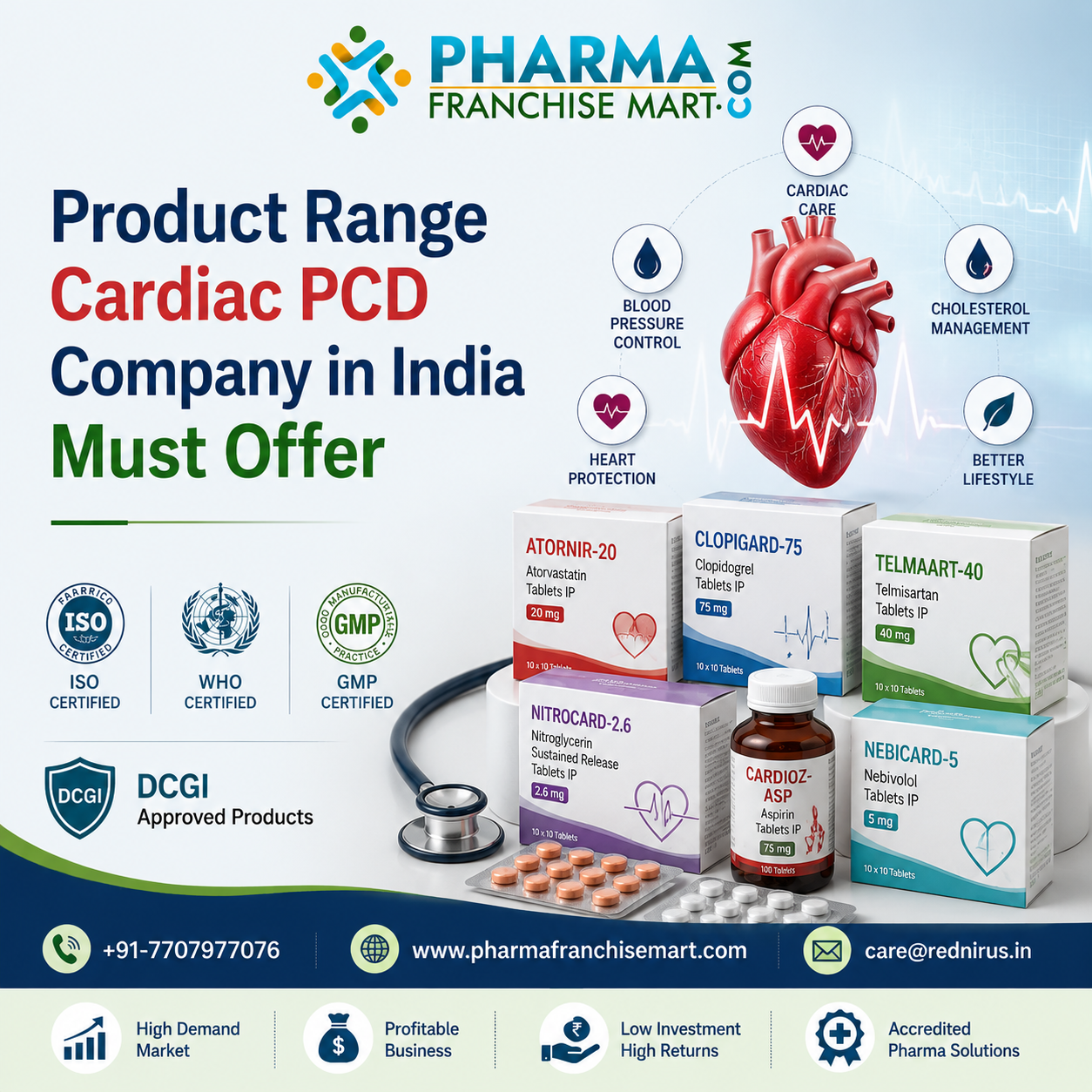
Evaluating cardiac PCD company in India partnerships purely on territory terms or pricing misses the fundamental question: does their product portfolio actually cover what cardiologists, diabetologists, and general practitioners prescribe daily?
Incomplete cardiac portfolios create persistent problems. Prescriber relationships develop successfully. Doctors start trusting your products. Then they ask for something your company doesn’t offer. Competitor steps in with that product. Relationship you spent months building now partially benefits someone else.
PCD pharma franchise company in India portfolios in cardiac segment vary dramatically. Some manufacturers offer comprehensive cardiovascular coverage satisfying every prescriber category. Others have strong presence in two-three categories while leaving significant therapeutic gaps.
Understanding what complete cardiac portfolio looks like helps evaluate manufacturers intelligently. We’re walking through every essential product category a serious pharma franchise company cardiac distributor needs covered—practical categories cardiologists and related specialists actually prescribe daily.
Antihypertensive Products: Highest Prescription Volume Category
Hypertension affects approximately 220 million Indians. Antihypertensive prescriptions represent highest-volume category any cardiac PCD company in India must cover comprehensively.
ACE Inhibitors and ARBs
Angiotensin-converting enzyme inhibitors and angiotensin receptor blockers are cornerstone hypertension treatments. Essential products include:
Ramipril in multiple strengths—2.5mg, 5mg, 10mg. Enalapril for cost-sensitive patient populations. Telmisartan—one of most prescribed ARBs in India. Olmesartan gaining significant cardiologist preference. Losartan for patients tolerating ARBs but needing affordable options.
Cardiologists rarely prescribe single antihypertensive agents for moderate-severe hypertension. Combination products covering fixed-dose combinations of ACE inhibitor plus diuretic, ARB plus calcium channel blocker, represent significant prescription volumes.
Calcium Channel Blockers
Amlodipine remains among most prescribed cardiovascular medications in India. Every cardiac PCD company in India must offer:
Amlodipine 2.5mg, 5mg, 10mg covering complete dosing range. Amlodipine combinations with telmisartan, olmesartan, ramipril—fixed-dose combinations cardiologists prefer for compliance improvement. Cilnidipine gaining prescriber preference for additional renal protection benefits.
Diuretics
Thiazide and loop diuretics prescribed alongside other antihypertensives. Hydrochlorothiazide most commonly in combinations. Indapamide as alternative. Furosemide for heart failure and edema management.
Missing diuretic range forces prescribers sourcing from competing distributors for routine combination therapy needs.
Cholesterol Management: High-Value Recurring Prescriptions
Dyslipidemia management requires long-term medication—creating predictable recurring prescription revenue for monopoly pharma franchise cardiac distributors.
Statin Range
Statins are backbone of cardiovascular risk reduction therapy. Complete statin range requires:
Atorvastatin in full strength range—10mg, 20mg, 40mg, 80mg. Rosuvastatin 5mg, 10mg, 20mg, 40mg—increasingly preferred for superior LDL reduction. Pitavastatin for specific patient populations needing minimal drug interactions.
Statin combinations significantly expand portfolio value. Atorvastatin plus ezetimibe. Rosuvastatin plus ezetimibe. These combination products are increasingly standard prescribing when statin monotherapy proves insufficient.
Fibrates and Other Lipid Agents
Fenofibrate for mixed dyslipidemia patients with elevated triglycerides—cardiologists regularly add fibrates alongside statins. Omega-3 fatty acid formulations in pharmaceutical-grade prescription concentrations rather than OTC supplement positioning.
Ezetimibe standalone for patients intolerant to statins. Niacin-based combinations for complete lipid profile management.
Antiplatelet and Anticoagulant Products
Cardiac patients on long-term antiplatelet therapy represent significant prescription volumes requiring consistent supply.
Antiplatelet Agents
Aspirin in cardiac doses—75mg, 150mg—fundamental to post-cardiac event management. Clopidogrel 75mg widely prescribed for acute coronary syndrome and post-stent patients. Dual antiplatelet combinations—aspirin plus clopidogrel—simplifying compliance for post-stent patients.
Ticagrelor gaining ground for acute coronary syndrome management among cardiologists preferring newer antiplatelet agents with superior evidence.
Anticoagulants
Newer oral anticoagulants represent premium-margin cardiac products. Rivaroxaban for atrial fibrillation stroke prevention and DVT management. Apixaban increasingly preferred for its bleeding profile. Dabigatran for specific patient populations.
Pharma third party manufacturers producing these newer anticoagulant generics as patents expire create significant distribution opportunities for cardiac PCD company in India operators building hospital and specialist relationships.
Warfarin remains relevant for cost-sensitive patients requiring anticoagulation where newer agents aren’t affordable.
Antidiabetic Products: Essential Cardiac Companion Category
Cardiovascular disease and diabetes are deeply interconnected. Cardiologists managing cardiac risk in diabetic patients frequently prescribe antidiabetic medications alongside cardiac products.
SGLT2 Inhibitors
Empagliflozin and dapagliflozin have demonstrated cardiovascular outcome benefits beyond glucose lowering—cardiologists now prescribe these specifically for heart failure and cardiovascular protection regardless of diabetes status.
This category represents exceptional opportunity for cardiac PCD company in India operators. Cardiologists are prescribing SGLT2 inhibitors. Having these products alongside your cardiac range captures prescriptions without requiring separate diabetes-focused marketing.
Metformin Combinations
Metformin combined with various antidiabetic agents for diabetic patients with cardiovascular risk. Metformin plus sitagliptin. Metformin plus vildagliptin. These combination products simplify diabetic cardiac patient management.
GLP-1 Receptor Agonists
Semaglutide and liraglutide showing cardiovascular benefits driving cardiologist interest. Premium pricing with strong margins for PCD pharma franchise company in India operators accessing this growing segment.
Heart Failure Management Products
Heart failure represents specialized but growing prescription segment as diagnosis rates improve with better echocardiography access.
Beta-Blockers
Metoprolol succinate—specifically the extended-release formulation—is standard heart failure therapy. Carvedilol for patients requiring combined beta and alpha blockade. Bisoprolol gaining preference for tolerability profile.
Beta-blockers also prescribed extensively for hypertension, angina, and arrhythmia management beyond heart failure—making this category high-volume across multiple cardiac indications.
Aldosterone Antagonists
Spironolactone for heart failure and resistant hypertension. Eplerenone for patients experiencing spironolactone side effects. These products appear in significant cardiac prescriptions but many monopoly pharma franchise operators overlook them.
Sacubitril-Valsartan
Newer heart failure therapy showing superior outcomes versus traditional ACE inhibitors. Increasingly prescribed by cardiologists following updated heart failure guidelines. Premium pricing with excellent margins for distributors accessing this category.
Nitrates and Antianginal Products
Angina management requires specific product categories that dedicated cardiac distributors must carry.
Nitrate Formulations
Isosorbide mononitrate in immediate and extended-release formulations for stable angina management. Isosorbide dinitrate as alternative. Sublingual glyceryl trinitrate for acute angina relief—every cardiac patient needs this rescue medication.
Other Antianginal Agents
Ranolazine for refractory angina patients inadequately controlled on standard therapy. Ivabradine for specific patient populations with elevated heart rates despite beta-blockade.
Cardiac Nutritional Support Products
Beyond prescription medications, cardiologists recommend nutritional supplements addressing cardiovascular risk factors.
Coenzyme Q10
CoQ10 supplementation recommended alongside statin therapy to manage statin-associated muscle symptoms. Cardiologists prescribing long-term statins frequently add CoQ10. High-margin nutraceutical category with strong repeat purchase patterns.
Omega-3 Fatty Acids
Prescription-grade omega-3 formulations distinct from OTC supplements. Icosapent ethyl showing cardiovascular outcome benefits driving specialist prescribing. Strong margins with growing evidence base supporting prescriber confidence.
Magnesium and Potassium Supplements
Electrolyte supplementation for cardiac patients on diuretics. Potassium chloride combinations preventing diuretic-induced electrolyte imbalances. Magnesium supplementation for arrhythmia management support.
Antiarrhythmic Products
Arrhythmia management represents specialized cardiac prescribing requiring specific product availability.
Essential Antiarrhythmics
Amiodarone for various arrhythmias—widely prescribed despite monitoring requirements. Digoxin for atrial fibrillation rate control particularly in heart failure patients. Flecainide for specific arrhythmia subtypes.
Beta-blockers already mentioned serve dual purpose here—antiarrhythmic alongside antihypertensive and heart failure indications.
Evaluating Portfolio Completeness
When assessing cardiac PCD company in India portfolios against this framework, check coverage across every major category.
The Coverage Gap Test
Missing entire therapeutic categories means prescriptions you cannot fulfill. Cardiologists prescribing comprehensively across all categories either supplement from competing distributors or switch entirely to distributors offering more complete coverage.
Quality Consistency Across Range
Portfolio breadth means nothing without quality consistency. Pharma third party manufacturers producing cardiac products for pharma franchise company brand owners must maintain equivalent standards across all categories.
Cardiac medications where quality failures mean serious patient consequences—antihypertensives, anticoagulants, antiarrhythmics—require particular manufacturing precision. Batch analysis certificates across your complete range, not just flagship products, reveal whether quality commitment extends uniformly.
Bioequivalence Standards
Generic cardiac products require bioequivalence demonstration proving they perform clinically equivalently to reference products. Cardiac PCD company in India operators should verify bioequivalence data exists for key generic products in their portfolio.
Cardiologists are particularly sensitive to generic substitution in cardiovascular products where therapeutic failure has serious consequences. Bioequivalence data enables confident prescribing of generic alternatives—essential for building prescriber trust in your portfolio.
Complete cardiac product range covering all categories discussed positions distributors as comprehensive cardiovascular suppliers rather than partial solution providers. That positioning creates stronger prescriber loyalty and better business sustainability than aggressive pricing from incomplete portfolio competitors.
Read More: Multi-Brand Strategy Using Best Pharma Company Franchise Options