
 Post Your Requirement
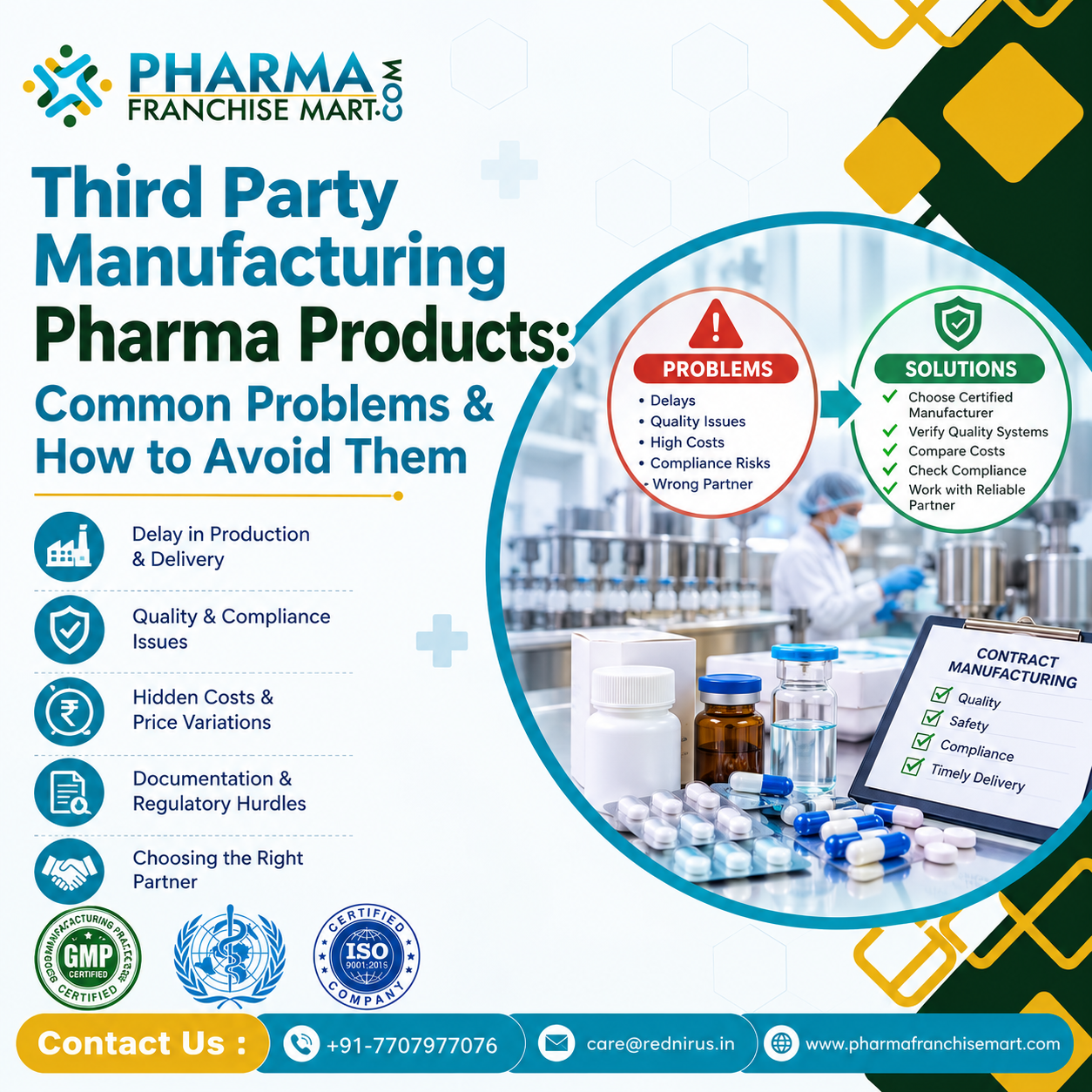
Third party manufacturing pharma products businesses fail more often from avoidable problems than from genuine market failures. Brand owners who’ve researched markets carefully, developed strong distribution plans, and invested significant capital discover manufacturing partnership problems undermining everything else.
The frustrating reality? Most third party manufacturing pharma products problems are predictable. They follow identifiable patterns. They occur at recognizable stages. And they’re preventable through specific precautions that experienced brand owners take while first-timers discover through expensive experience.
Third party manufacturing pharma products relationships are fundamentally partnerships where your brand reputation depends entirely on a manufacturer’s operational discipline. Quality failures become your quality failures. Supply disruptions become your supply disruptions. Regulatory problems become your regulatory problems—even when you had nothing to do with causing them.
Understanding which problems occur most frequently, why they occur, and specifically how to prevent them protects third party manufacturing pharma products investments that take years building into sustainable brand businesses.
Quality Inconsistency Across Production Batches
Why This Problem Is So Common
Batch-to-batch quality variation is the most frequently reported third party manufacturing pharma products problem. Brand owners discover that products working excellently in initial batches—the ones used for evaluation and market development—perform differently in subsequent commercial production.
Why does this happen? Initial batches often receive exceptional attention. Manufacturers wanting to secure contracts ensure evaluation samples and first commercial batches are produced under carefully controlled conditions with enhanced oversight. Commercial production batches receive normal attention—which reveals the actual quality system rather than the capability demonstrated during business development.
Pharma third party manufacturers who passed evaluation because they produced excellent initial batches but whose routine production is more variable create inconsistency that prescribers notice through patient outcomes.
Specific Manifestations
Tablet hardness varying between batches creating dissolution differences affecting drug release. Active ingredient content clustering near specification edges rather than label claim. Coating inconsistency producing appearance differences that prescribers and patients notice despite batches technically passing specifications. Microbiological contamination appearing in specific batches suggesting inadequate environmental controls or cleaning validation gaps.
Prevention Approach
Request batch analysis certificates spanning 15-20 consecutive production batches before commitment—not just recent certificates that might reflect enhanced attention to recent production. Assay results should cluster tightly around label claim consistently. Wide variation across consecutive batches reveals process control problems even when individual batches pass specifications.
Include batch-specific quality data review in ongoing management. Require third party manufacturing pharma company partners to provide complete certificates of analysis with every delivery—not generic certificates claiming compliance without actual results. Conduct periodic independent testing of commercial batches through accredited laboratories to verify manufacturer testing accuracy.
Raw Material Substitution Without Notification
The Substitution Problem
Pharma third party manufacturing company operators sometimes substitute raw materials—particularly APIs and key excipients—without notifying brand owners. These substitutions happen for various reasons: original supplier facing shortage, lower-cost alternative identified, supply chain disruption requiring emergency sourcing.
Some substitutions are genuinely equivalent and inconsequential. Others create formulation performance differences affecting clinical outcomes. Some create regulatory compliance problems because approved formulations specify particular raw material sources.
The problem isn’t always intentional fraud—sometimes manufacturers genuinely believe substitutions are equivalent and make decisions without recognizing the brand owner’s right to be informed and consent.
Consequences
Prescribers experiencing different patient outcomes from different production batches stop recommending the brand. Regulatory authorities discovering undisclosed formulation changes during inspections initiate enforcement actions affecting the brand owner’s regulatory standing. Clinical inconsistency destroys prescriber trust that took months building.
Prevention Approach
Contract language must explicitly require manufacturer notification before any raw material changes—API source, excipient supplier, packaging material supplier—with brand owner approval required before implementation.
Third party manufacturing pharma companies operating professionally understand and accept this requirement because they recognize brand owner’s regulatory and business interest in formulation consistency. Manufacturers who resist contractual raw material change notification requirements are signaling they consider such changes their prerogative—serious red flag worth discovering before commitment.
Audit raw material supplier lists during periodic facility visits. Verify approved vendor lists match what’s actually being used by cross-referencing purchase records against approved suppliers during audits. Material discrepancies reveal substitution practices that contract protections alone don’t prevent.
Supply Disruption and Stock-Out Problems
Why Supply Fails
Third party manufacturing pharma partnerships create supply dependencies that manufacturers sometimes cannot fulfill reliably. Causes range from legitimate to concerning:
Raw material shortages affecting API availability industry-wide. Production scheduling conflicts when manufacturer’s capacity becomes overcommitted across multiple brand clients. Equipment breakdown delaying scheduled production runs. Regulatory holds following inspection observations requiring manufacturing pause. Financial constraints limiting raw material procurement.
Each cause has different implications for partnership viability. Industry-wide raw material shortages affect all manufacturers similarly—genuine force majeure situations. Chronic overcommitment suggests manufacturer accepted more brand partnerships than capacity supports. Financial constraints indicate business stability problems that quality and supply will continue reflecting.
Business Impact
Prescribers who’ve recommended your brand to patients face credibility problems when products disappear from pharmacies. Retailers who’ve committed shelf space lose confidence in your supply reliability. Competitors fill supply vacuums during your stock-out periods and don’t automatically lose those prescriber and retailer relationships when your supply returns.
Supply disruptions in pharmaceutical third party manufacturing relationships are particularly damaging because they affect market positions built through sustained relationship investment that competitors quickly exploit.
Prevention Approach
Evaluate supply track record through independent existing client conversations before partnership. Ask specifically: “How many stock-outs have you experienced in past 12 months? How much advance notice did you receive? Which products were affected?”
Negotiate contractual supply commitments with specific advance warning requirements when supply constraints emerge. Third party manufacturing pharma products brand owners need minimum 4-6 weeks advance warning of supply problems to manage prescriber and retailer relationships proactively rather than discovering problems when orders are placed.
Maintain safety stock buffers covering 45-60 days of projected demand for fast-moving products. This capital investment protects market positions during temporary supply disruptions that even reliable manufacturers occasionally experience.
Diversify manufacturing across multiple pharma third party manufacturers for your most critical products. Single-source dependency for high-volume products creates unacceptable supply vulnerability regardless of manufacturer reliability.
Contract Gaps Creating Partnership Problems
Common Contract Deficiencies
Many third party manufacturing products brand owners sign contracts that feel comprehensive during the negotiation enthusiasm of new partnerships but reveal significant gaps when problems arise.
Missing or inadequate provisions around:
Minimum quality specifications: Contracts stating products must “meet pharmacopoeial specifications” without defining specific assay ranges, dissolution requirements, and physical quality parameters leave quality standards dangerously open to interpretation.
Batch rejection and replacement: When batches fail quality specifications, what happens? Who bears replacement production costs? What timelines apply? Contracts silent on rejection consequences leave brand owners in weak positions when quality failures occur.
Intellectual property protection: Formulations developed for specific brands sometimes appear under competitor brand names when inadequate IP protection allows manufacturers to share proprietary formulation details with competing clients.
Minimum supply commitments: Manufacturers who cannot fulfill orders during high-demand periods claim no contractual obligation to prioritize your production if supply commitments aren’t specified.
Creating Effective Contracts
Work with legal professionals experienced in pharmaceutical manufacturing agreements rather than accepting manufacturer-provided standard contracts that protect manufacturer interests primarily.
Pharma franchise operators and brand owners should specifically include: detailed product specifications with numerical acceptance criteria, batch rejection and replacement provisions, raw material change notification requirements, IP protection and confidentiality obligations, supply commitment minimums with failure remedies, audit rights enabling facility access, and termination provisions protecting inventory investment.
These provisions aren’t adversarial additions to otherwise cooperative agreements—they’re reasonable protections that professional pharma third party manufacturing company operators accept readily because they operate in ways that make such provisions non-threatening.
Regulatory Compliance Problems
Manufacturer Compliance Failures Becoming Brand Owner Problems
Third party manufacturing pharma products regulatory exposure extends beyond your own compliance to manufacturer compliance. Operating under manufacturing licenses from facilities facing regulatory action creates serious problems for brand owners regardless of their own compliance quality.
Drug control authorities hold brand owners responsible for products bearing their brand name regardless of where or how those products were manufactured. Manufacturer license suspension stops production affecting your supply. Product recalls initiated because of manufacturer quality failures extend to your brand products. Regulatory show cause notices to manufacturers create guilt-by-association reputational damage for brands they produce.
Documentation Problems
Regulatory problems also arise from inadequate manufacturing documentation that creates compliance gaps during inspections. Missing batch records. Inadequate change control documentation for formulation modifications. Incomplete stability data for shelf life claimed on product labeling.
Pharmaceutical third party manufacturing relationships require brand owners maintaining their own regulatory documentation rather than assuming manufacturers maintain everything necessary.
Prevention Approach
Verify manufacturer regulatory history thoroughly before partnership. CDSCO databases, state drug authority records, and industry contacts provide information about enforcement actions, inspection observations, and compliance problems that manufacturer presentations never voluntarily disclose.
Maintain your own regulatory documentation copies—batch records, certificates of analysis, stability data—rather than depending entirely on manufacturer record-keeping. When manufacturer records become inaccessible through business closure, system failure, or partnership termination, your independent documentation protects regulatory compliance continuity.
Conduct periodic manufacturer audits verifying ongoing regulatory compliance rather than relying entirely on initial pre-partnership verification. Compliance status changes—sometimes deteriorating after initial partnership establishment when you’re less scrutinizing.
Communication Failures and Relationship Problems
How Communication Breaks Down
Third party manufacturing pharma company relationships that start with excellent communication frequently deteriorate. Initial business development involves senior manufacturer personnel who communicate proactively and responsively. After contracts are signed and production begins, communication shifts to operational staff who may be less responsive and less proactive.
Common communication failure patterns: quality problems discovered during internal testing not communicated until orders are placed. Production delays discovered by brand owners rather than proactively reported. Raw material shortages identified internally but not communicated until supply impact is inevitable.
Structural Prevention
Establish formal communication protocols as part of partnership agreements. Regular production status updates—weekly during initial production cycles, monthly during ongoing commercial production. Defined notification timelines for quality concerns, supply issues, and regulatory developments.
Identify multiple contact persons within the manufacturer organization rather than depending on single relationship. When primary contact is unavailable, unavailable, or departed, communication continuity depends on alternative contacts established during normal operating periods.
Monthly or quarterly business review meetings reviewing production performance, quality trends, supply forecast, and upcoming developments create structured communication that prevents problems accumulating invisibly until they’ve become serious.
Finding Reliable Partners Through Right Channels
Platform-Based Verification
Rather than discovering pharma third party manufacturers through random internet searches where any company claims any capability, use platforms and industry networks that provide some level of initial screening.
Pharmaceutical industry associations, trade events, and specialized B2B platforms connect brand owners with manufacturers whose basic credentials have been assessed rather than self-reported only. These starting points don’t eliminate due diligence but provide better initial pools than unverified directories.
Pharma franchise company networks often have manufacturer relationships spanning years that provide experiential quality intelligence unavailable from any documentation review. Industry relationships revealing which manufacturers consistently deliver against commitments—and which consistently disappoint—are among the most valuable research resources available.
The third party manufacturing pharma products problems outlined here aren’t inevitable consequences of third party manufacturing as a business model. They’re predictable outcomes of inadequate partner selection, insufficient contractual protection, and inadequate ongoing relationship management. Addressing each preventable problem specifically through the approaches described here transforms third party manufacturing from risky dependency into manageable business relationship supporting sustainable brand building.
Read More: Best Pediatric PCD Pharma Franchise Opportunity in Tier 2 and Tier 3 Cities