
 Post Your Requirement
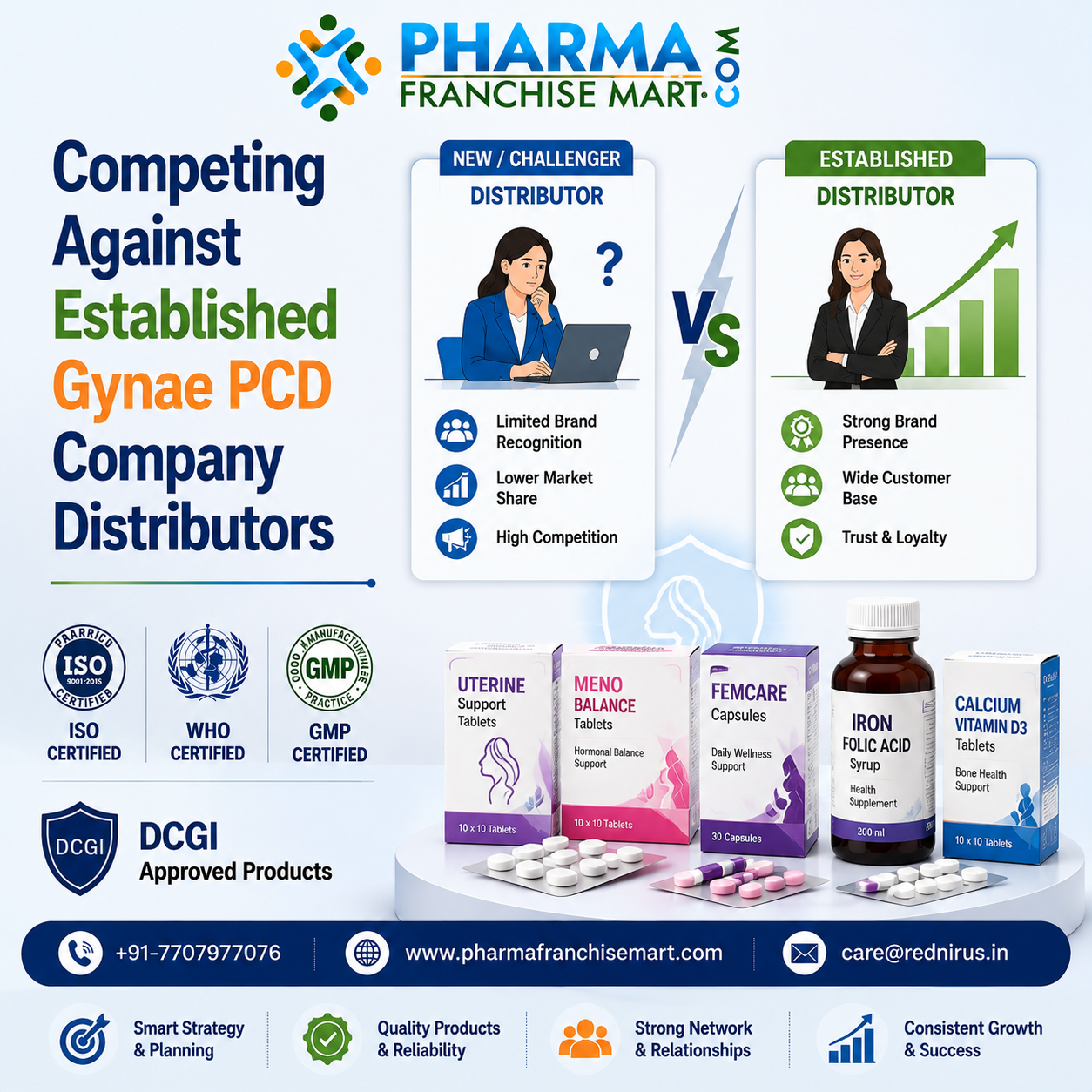
Entering markets where established gynae PCD company distributors have built years of prescriber relationships feels intimidating. Doctors already loyal to competitors. Pharmacies already stocked with competing brands. Territory that looks saturated from outside.
But established gynae PCD company distributors have weaknesses new entrants rarely recognize initially. Complacency creeps into long-standing relationships. Coverage becomes selective rather than systematic. Product knowledge grows stale. Service quality plateaus once relationship security feels guaranteed.
New gynae PCD company distributors who understand exactly where established competitors are vulnerable can build genuine market positions even in seemingly crowded territories. Not by fighting established players directly on their strongest ground—but by identifying and exploiting specific gaps they’ve left open.
We’re examining practical strategies new gynae PCD company distributors use competing effectively against entrenched operators rather than surrendering territory before genuinely trying.
Understanding Established Competitor Weaknesses
Complacency in Long-Standing Relationships
Gynae PCD company distributors who’ve served same gynecologists for five-eight years often develop relationship complacency invisible to themselves but obvious to prescribers experiencing it.
Visit frequency drops below what relationship maintenance actually requires. Product knowledge updates stop happening. Clinical conversations become transactional. Representatives who were once genuinely helpful become routine visitors providing diminishing value.
Prescribers notice this deterioration even when they don’t explicitly complain about it. The doctor who’s been prescribing established distributor’s products for years isn’t necessarily satisfied—they may simply lack compelling reason to switch until someone provides one.
Your arrival with fresh energy, current product knowledge, and genuine service commitment contrasts favorably against this complacency backdrop. Prescribers comparing attentive new representative against routine established one make comparisons favoring new entrants more often than competitors expect.
Coverage Gaps in Established Territories
Established gynae PCD company distributors rarely cover complete prescriber populations within their territories. Coverage naturally concentrates around relationships that developed organically—doctors who were accessible early, practices near convenient routes, prescribers who responded enthusiastically initially.
This organic development leaves systematic coverage gaps. GPs prescribing gynecological products but never approached because established distributor focused exclusively on specialist gynecologists. Newer practitioners who established practices after original relationships formed. Nursing homes and maternity facilities that never became priority targets. Pediatricians prescribing products for childhood gynecological conditions completely ignored.
These gaps represent genuine opportunity for new gynae PCD company distributors entering territories. You’re not competing directly against established relationships—you’re serving prescribers nobody has adequately served.
Portfolio Limitations
Established gynae PCD pharma franchise operators sometimes built relationships around manufacturer portfolios that haven’t evolved with market needs. Products that were comprehensive five years ago may have significant gaps today.
PCOS management has expanded dramatically. Fertility support product sophistication has increased. Postpartum care awareness has grown. Menopause management options have improved. Cosmeceutical gynae products have emerged.
Established distributors locked into long-standing manufacturer relationships may lack access to newer therapeutic categories that progressive gynecologists are actively seeking. New gynae PCD company distributors partnering with manufacturers offering comprehensive current portfolios can offer prescribers products that established competitors simply cannot provide.
Entry Strategy: Finding Your Opening
Prescriber Segmentation Analysis
Before approaching any prescriber in your target territory, map complete prescriber landscape systematically.
Identify every relevant prescriber—gynecologists obviously, but also GPs with significant women’s health prescribing, endocrinologists managing PCOS, pediatricians treating childhood conditions. Categorize them by established relationship status with competitors.
Fully locked: Senior gynecologists with decade-long established relationships. Direct frontal competition is inefficient here initially. Worth approaching eventually but not your opening strategy.
Partially served: Prescribers receiving some coverage from established gynae PCD companies but not comprehensively. Product gaps exist. Visit frequency is adequate but not excellent. Service quality is acceptable but not exceptional. These are your primary initial targets.
Under-served: Newer practitioners, peripheral specialists, GPs with gynae prescribing who established distributors haven’t prioritized. These are your easiest initial market entry points.
Completely unserved: Prescribers established competitors have entirely missed. Pure opportunity requiring no displacement of existing relationships.
Concentrating initial effort on partially-served, under-served, and unserved segments allows building prescription base and operational momentum without fighting established competitors on their strongest ground immediately.
The Gap Product Strategy
Research which product categories established gynae products franchise operators in your territory cannot offer.
If dominant competitor’s manufacturer lacks comprehensive PCOS range—your PCOS portfolio becomes your opening. If their prenatal nutrition range is incomplete—your comprehensive prenatal coverage creates switching motivation. If they lack quality vaginal health products—your antifungal and probiotic range fills prescriber needs.
Entering with product categories competitors cannot match eliminates direct comparison on established ground. You’re not asking prescribers to switch brands they know—you’re offering products they need but can’t get from current suppliers.
This gap strategy requires thorough competitor portfolio intelligence before selecting your own gynae PCD franchise manufacturer partner. Choose manufacturers whose strengths complement established competitor weaknesses in your specific territory.
Differentiation Through Service Quality
Consistency as Competitive Weapon
Established gynae PCD company distributors are often inconsistent in ways they don’t realize. Good months of regular visits followed by gaps when personal issues, other business demands, or reduced motivation affect coverage frequency.
Prescribers notice visit inconsistency even when they don’t explicitly mention it. Unreliable coverage creates low-level dissatisfaction that doesn’t motivate switching but creates receptivity when consistent alternative appears.
Commit to visit frequency that exceeds established competitor consistency. Fortnightly visits when competitor visits monthly. Monthly visits when competitor visits quarterly. The prescriber who sees you reliably while seeing competitor inconsistently forms favorable comparison naturally without you needing to criticize competitor directly.
Clinical Knowledge as Differentiator
Gynae PCD franchise representatives who understand gynecological conditions, treatment mechanisms, and clinical evidence earn prescriber time and attention unavailable to representatives with surface-level product knowledge.
Established gynae PCD company distributors often have representatives whose product knowledge peaked at training and hasn’t updated since. Current clinical evidence, new treatment guidelines, emerging therapeutic approaches—these aren’t being communicated to prescribers by representatives whose learning stopped years ago.
Invest in genuine clinical knowledge development. Study current gynecological practice guidelines. Understand PCOS management evolution. Know current evidence on hormonal contraception options. Track emerging research on menopause management approaches.
When you discuss current clinical evidence that established representatives don’t know about, prescribers notice. You become associated with clinical value rather than transactional product pushing.
Problem-Solving Approach
Establish reputation as gynae PCD company distributors who solve problems rather than just taking orders.
Prescriber needs product urgently for specific patient—you find solution same day. Retailer has question about product storage—you provide accurate answer immediately. Prescriber wants clinical information about product mechanism—you send relevant literature within hours.
This responsive problem-solving approach contrasts with established distributors who’ve become routine rather than resourceful. Prescribers who experience genuine responsiveness from new gynae PCD companies representative while getting routine service from established competitor develop preference for new relationship.
Building Retailer Network Strategically
Pharmacy Coverage Complementing Prescriber Development
Prescriptions written but unavailable at convenient pharmacies convert to competitor products. Systematic retail pharmacy coverage ensuring product availability is non-negotiable alongside prescriber development.
Map pharmacies near every target prescriber’s clinic location. Prioritize stocking pharmacies within walking distance of active prescribers before expanding to broader retail coverage.
When prescriber recommends your product and patient finds it immediately available at nearby pharmacy, complete prescription fulfillment creates positive experience reinforcing prescriber’s recommendation confidence. Unavailable products create prescriber embarrassment that motivates switching back to reliably available established brands.
Creating Pharmacy Pull
Established pharma franchise distributors who’ve served pharmacies long-term sometimes have retailer relationships based on history rather than current service quality. Payment terms may be inflexible. Product availability may be inconsistent. Complaint handling may be slow.
New entrants offering better payment terms, more flexible minimum orders, faster complaint resolution, and reliable supply can earn pharmacy preference that creates independent retail pull alongside prescriber-driven demand.
Pharmacists who prefer working with specific gynae PCD company distributors because of service quality will recommend your products when patients present with prescriptions that allow brand selection. Pharmacist recommendation influence on patient brand choice is underestimated by most distributors.
Targeting Newer and Growing Prescribers
The New Practitioner Opportunity
Established gynae PCD company distributors naturally concentrated relationships around practitioners who were active when they entered the market. New gynecologists establishing practices represent fresh opportunity without established relationship disadvantage.
Newly graduated gynecologists starting independent practices or joining new hospitals are actively forming supplier relationships. No established competitor loyalty yet. Open to building new relationships with distributors demonstrating professionalism and product quality.
Identify newly established practices through hospital staff announcements, medical council new registrations, and pharmaceutical association new member lists. First contact advantage with new practitioners is enormously valuable—early relationships often persist throughout practitioner careers.
The Growing Practice Priority
Among prescribers you identify, prioritize those showing growth trajectory over those with static or declining practices.
A gynecologist who joined hospital two years ago and built practice from small to medium patient volume is more valuable long-term target than established gynecologist with large but static practice. Growing practices generate increasing prescription volumes over time. Relationships built during growth phase persist as practices mature.
Monopoly pharma franchise operators who identify and invest in growing prescribers early build relationships that become increasingly valuable without requiring competitive displacement of established relationships.
Patience and Timeline Realism
The Displacement Timeline
Replacing established gynae PCD company distributors prescription volumes doesn’t happen in weeks. Prescribers don’t switch established supplier relationships based on single impressive visit regardless of product quality or service promise.
Realistic displacement timeline requires 3-6 months of consistent, quality interaction before prescribers trial new products. Another 2-3 months of positive patient outcomes before consistent prescribing begins. Total timeline of 6-12 months from first visit to meaningful regular prescription volumes from previously established-competitor prescribers.
This timeline requires adequate working capital sustaining operations through development period without panic over slow initial conversion. Pharma franchise company operators entering competitive territories with insufficient working capital quit right before momentum builds.
Building Momentum Through Early Wins
While working toward displaced prescriber conversions over 6-12 months, build momentum through early wins from under-served and unserved prescriber segments.
GPs and newer practitioners converting faster than established specialists provide revenue sustaining operations during longer displacement timelines. Early wins also build confidence, operational experience, and market intelligence that improves effectiveness with more challenging established competitor territory.
By the time you’re ready competing directly for senior gynecologist relationships, you have proven products, confident representative, operational systems, and pharmacy coverage making the competitive case compelling rather than speculative.
Read More: How to Find Top Monopoly Pharma Franchise Company in India?