
 Post Your Requirement
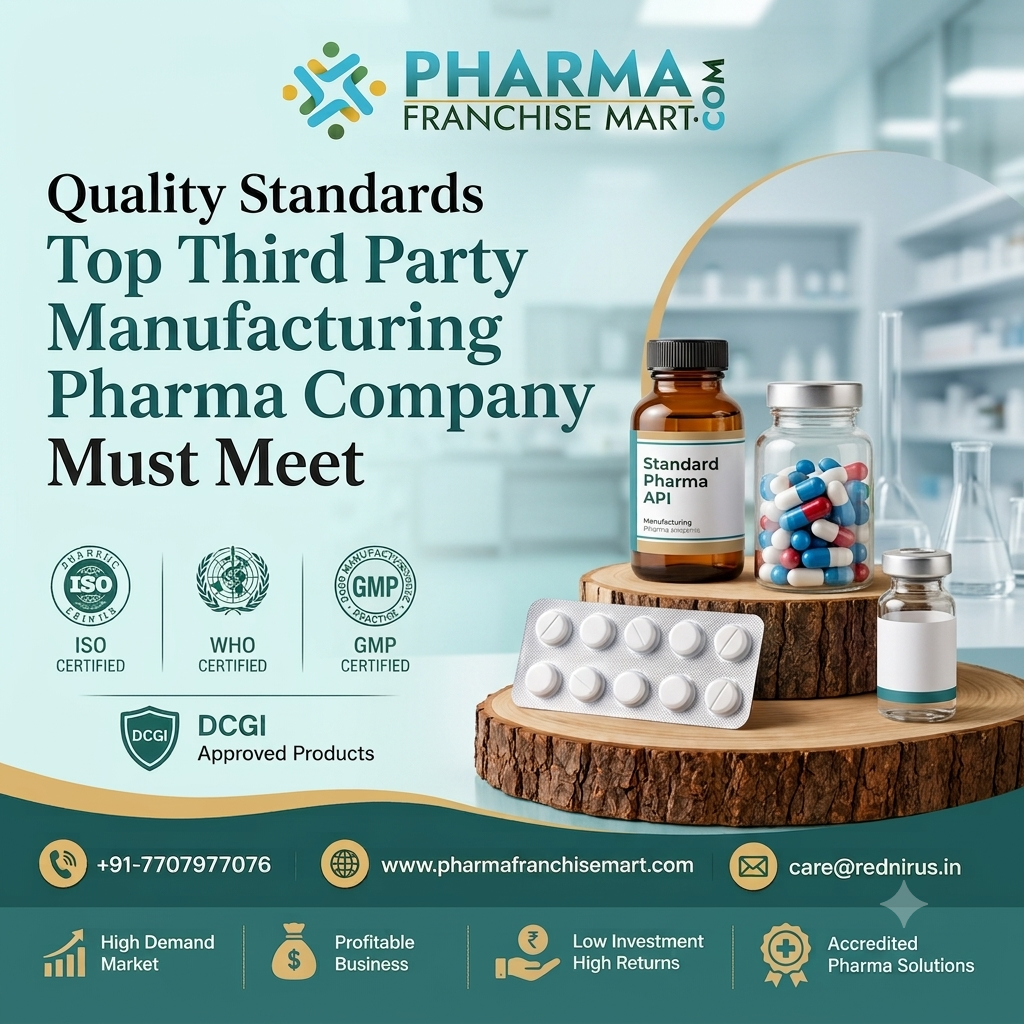
Pharmaceutical manufacturing quality isn’t optional. Products entering human bodies must meet exacting standards protecting patient safety and therapeutic effectiveness. Top Third party manufacturing pharma company operations face identical quality obligations as manufacturers producing their own brands—regulatory authorities make no distinction based on business model.
Brand owners partnering with Top pharma third party manufacturers carry shared responsibility for product quality reaching end consumers. When quality failures occur, regulatory action targets both manufacturer and brand owner. Reputational damage affects your brand regardless of where manufacturing responsibility actually lies.
Understanding quality standards Top third party manufacturing pharma companies must meet serves two purposes. It helps you evaluate potential partners intelligently. It also clarifies your own responsibilities as brand owner working within pharmaceutical third party manufacturing arrangements.
We’re examining specific quality standards, certifications, and systems that distinguish genuinely quality-focused manufacturers from those maintaining minimum compliance appearances.
Schedule M Compliance: The Baseline Requirement for Top Third Party Manufacturing Pharma Company
Schedule M under India’s Drugs and Cosmetics Act defines Good Manufacturing Practices for pharmaceutical manufacturers. Compliance isn’t optional—it’s legal requirement for every top third party manufacturing pharma operation.
What Schedule M Actually Requires
Schedule M covers comprehensive manufacturing quality requirements:
Premises and Equipment: Manufacturing areas must meet specific construction standards preventing contamination. Floors, walls, and ceilings must be smooth, washable, and non-shedding. Separate areas for different manufacturing stages prevent cross-contamination. Equipment must be designed, constructed, and maintained preventing product contamination.
Personnel Requirements: Qualified technical staff with appropriate educational backgrounds must supervise manufacturing operations. Minimum qualifications for key positions—production manager, quality control head—are specifically defined. Personnel training programs must be documented and regularly updated.
Documentation Systems: Every manufacturing step must be documented in real-time. Batch manufacturing records, standard operating procedures, master formula records, equipment logbooks—comprehensive documentation systems enabling complete batch traceability.
Quality Control: Dedicated quality control department independent from production must test every batch before release. In-house laboratory with adequate equipment for finished product and raw material testing is mandatory.
Verifying Schedule M Compliance
Don’t accept verbal assurances. Top Pharma third party manufacturing company operators genuinely compliant with Schedule M welcome documentation scrutiny.
Request recent drug control authority inspection reports. Ask specifically about any observations received and corrective actions implemented. Manufacturers with clean inspection histories readily share this information. Those with significant observations become defensive or vague.
WHO-GMP Certification
World Health Organization Good Manufacturing Practices certification represents internationally recognized quality standard for top pharmaceutical third party manufacturing facilities.
Why WHO-GMP Matters Beyond Compliance
Schedule M meets Indian regulatory requirements. WHO-GMP meets international standards often stricter than domestic requirements in specific areas.
Top Pharma third party manufacturers holding WHO-GMP certification have demonstrated quality systems capable of meeting international export market requirements. This certification signals genuine quality investment rather than minimum compliance maintenance.
For brand owners considering future export opportunities, partnering with WHO-GMP certified manufacturers from the beginning prevents expensive manufacturer switching later.
Certification Verification
WHO-GMP certificates must be current—typically renewed every 2-3 years following facility inspections. Verify:
- Certificate validity dates
- Certifying authority legitimacy
- Specific dosage forms and product categories covered
- Any conditions or limitations attached to certification
Certificates covering only specific dosage forms don’t automatically validate quality for other product types. Tablet manufacturing certification doesn’t confirm injectable production capability.
Raw Material Quality Standards
Product quality starts before manufacturing begins. Top Third party manufacturing pharma companies with robust raw material quality systems prevent quality problems that manufacturing controls alone can’t catch.
Approve suppliers before use: Vendor qualification processes assess API manufacturer capabilities, regulatory compliance, and quality consistency before first purchase. Not every supplier offering competitive pricing deserves approval.
Test every incoming batch independently: Certificate of Analysis from API supplier doesn’t eliminate incoming testing requirement. Genuine quality manufacturers verify supplier certificates through independent testing rather than trusting documentation alone.
Maintain approved vendor lists: Only pre-qualified suppliers appear on approved vendor lists. Purchasing from unapproved vendors to access better pricing or during shortage periods represents serious quality system breakdown.
Excipient Standards
Supporting ingredients—fillers, binders, lubricants, coating materials—affect product stability, bioavailability, and patient acceptability. Pharmaceutical-grade excipients meeting pharmacopoeial standards are mandatory.
Top Third party manufacturing pharma operators using non-pharmaceutical grade excipients to reduce costs create products with unpredictable quality and potential safety concerns. Verification of excipient grade and sourcing is part of thorough manufacturer evaluation.
Water Quality
Water used in pharmaceutical manufacturing must meet specific quality standards. Purified Water for most solid dosage manufacturing. Water for Injection for parenteral products.
Water system validation, regular testing, and documentation of water quality are baseline requirements. Top Pharmaceutical third party manufacturing facilities with inadequate water systems produce products with potential microbiological contamination regardless of other quality controls.
In-Process Quality Controls
Quality manufactured products require controls throughout production, not just final testing.
Critical Process Parameter Monitoring
Manufacturing processes have critical parameters affecting final product quality. Tablet compression force, granulation moisture content, coating solution spray rate, blending time—these parameters must be monitored and controlled within validated ranges.
Quality third party manufacturing pharma companies document in-process results in real-time. Parameters drifting outside acceptable ranges trigger investigation and corrective action before continuing production, not after batch completion.
Yield Reconciliation
Tracking material quantities throughout manufacturing reveals potential problems. Unexplained yield losses might indicate diversion, calculation errors, or process problems requiring investigation.
Top pharma third party manufacturers maintain strict yield reconciliation at each manufacturing stage. Manufacturers unable explaining yield variations have documentation gaps creating both quality and integrity concerns.
Finished Product Testing Requirements
Every batch released to market must pass comprehensive quality testing regardless of in-process results.
Compendial Testing Standards
Top Third party manufacturing pharma products must meet pharmacopoeial standards—Indian Pharmacopoeia, British Pharmacopoeia, or United States Pharmacopeia depending on product registration and market.
Standard finished product tests include:
- Assay confirming active ingredient content within specification
- Dissolution testing for oral solid dosage forms
- Disintegration testing where applicable
- Physical appearance and dimensions
- Uniformity of dosage units
- Microbial limits for non-sterile products
- Sterility testing for parenteral products
Every test must be performed using validated methods with properly calibrated equipment by qualified analysts.
Stability Testing Programs
Shelf life claims require stability data support. Top Pharma third party manufacturing company operations must conduct:
Real-time stability studies: Products stored under labeled conditions with periodic testing confirming quality maintenance throughout claimed shelf life.
Accelerated stability studies: Elevated temperature and humidity conditions predicting stability performance and supporting shelf life determination while real-time data accumulates.
Ongoing stability programs: Retained samples from periodic batches tested throughout product lifecycle confirming manufacturing consistency over time.
Manufacturers claiming 24-36 month shelf life without stability data supporting that claim are making assertions unsupported by evidence. Brand owners bear regulatory responsibility for shelf life claims appearing on their products.
Out-of-Specification Investigation
When test results fall outside specifications, investigation must occur before batch disposition decisions. Top third party manufacturing pharma companies follow documented OOS investigation procedures:
- Laboratory investigation ruling out analyst error or equipment malfunction
- Production investigation identifying potential manufacturing causes
- Documentation of investigation findings and conclusions
- Batch disposition decisions based on complete investigation
Manufacturers releasing batches despite OOS results, or retesting without complete investigation, demonstrate quality system failures with direct patient safety implications.
Qualified Person and Batch Release
Every batch reaching market requires release authorization from qualified personnel.
Qualified Person Responsibilities
Qualified Person—typically qualified pharmacist or chemist meeting regulatory requirements—reviews complete batch documentation before authorizing release. This review confirms:
- All manufacturing steps completed as documented
- All in-process tests passed within specification
- All finished product tests passed within specification
- No unresolved deviations or investigations
- Complete documentation available and reviewed
Batch release without complete QP review represents serious quality system failure.
Documentation Completeness
Batch release requires complete, accurate documentation. Pharmaceutical third party manufacturing operations releasing batches with incomplete documentation create products lacking full traceability—regulatory violation and quality system failure simultaneously.
Change Control Systems
Pharmaceutical manufacturing processes and products cannot be changed arbitrarily without assessment and documentation.
What Requires Change Control
Changes affecting product quality must go through formal change control:
- Raw material supplier changes
- Manufacturing process modifications
- Equipment changes or replacements
- Facility modifications
- Testing method changes
- Packaging component changes
Top Third party manufacturing pharma companies implementing changes without formal change control create products potentially different from originally validated and registered formulations—regulatory violation with product quality implications.
Change Control Documentation
Change control records must document:
- Detailed description of proposed change
- Risk assessment for quality impact
- Required studies or validations before implementation
- Regulatory notification requirements
- Implementation timeline and responsibilities
- Post-implementation verification
The Pharma Franchise Parallel
Pharma franchise brand owners sometimes assume manufacturer quality systems are entirely manufacturer’s responsibility. This misunderstanding creates dangerous gaps.
Brand owners have independent quality obligations. They must verify manufacturer quality systems before partnering. They must audit manufacturing facilities periodically. They must investigate quality complaints received from their markets. They must maintain product recall capabilities covering their distribution networks.
Quality partnership between brand owner and third party manufacturing pharma company creates shared quality responsibility systems protecting patients and both parties’ regulatory standing.
Meeting these quality standards isn’t bureaucratic compliance exercise. It’s fundamental to building pharmaceutical brands that genuinely serve patients, satisfy prescribers, and build sustainable business reputations worth protecting.